
However, contingent liability is a liability the company expects to incur in the future. In our case, we make assumptions about Sierra Sports and build our discussion on the estimated experiences. If the warranties are honored, the company should know how much each screw costs, labor cost required, time commitment, and any overhead costs incurred.
Common Claim Triggers for Construction Businesses
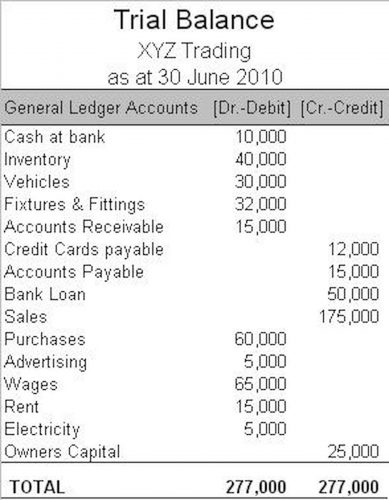
One common liquidity measure is the current ratio, and a higher ratio is preferred over a lower one. This ratio—current assets divided by current liabilities—is lowered by an increase in current liabilities (the denominator increases while we assume that the numerator remains the same). When lenders arrange loans with their corporate customers, limits are typically set on how low certain liquidity ratios (such as the current ratio) can go before the bank can demand that the loan be repaid immediately. Estimated liabilities are the expenses that are owed because the goods or services have been used/delivered. Invoices from the suppliers have not yet been received, so the exact amount is unknown at this time.
How to Account for Prepaid Insurance? (Definition, Classification, Journal Entries, and Example)
- Additionally, IFRS allows for a broader range of possible outcomes in estimation, which may lead to recognizing provisions earlier than under US GAAP.
- The liability must have more than a 50% chance of being realized if the value can be estimated.
- Furthermore, the matching convention dictates the timing of the recognition.
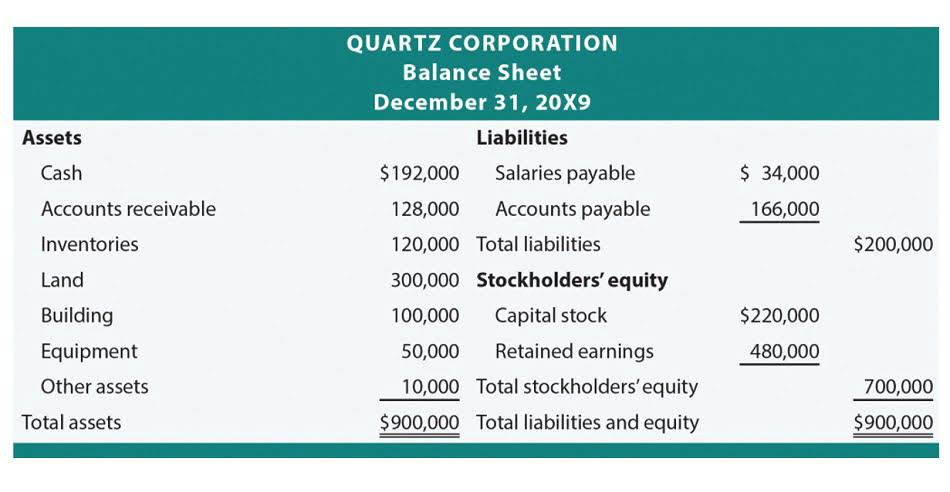
- Liabilities are a component of the accounting equation, where liabilities plus equity equals the assets appearing on an organization’s balance sheet.
- Contingent liabilities represent potential obligations that may arise based on the outcome of uncertain future events.
A “medium probability” contingency is one that satisfies either, but not both, of the parameters of a high probability contingency. These liabilities must be disclosed in the footnotes of the financial statements if either of the two criteria is true. Product warranties are often cited as a contingent liability that meets both of the required conditions (probable and the amount can be estimated).
Impact of contingent liabilities on a company’s share price
In today’s uncertain marketplace, accurate, timely reporting of contingencies helps business owners and other stakeholders manage potential risks and make informed financial decisions. Contact us for help categorizing contingencies based on likelihood and measurability and disclosing relevant information in a clear, concise manner. If these criteria aren’t met but the event is reasonably possible, companies must disclose the nature of the contingency and the potential amount (or range of amounts). If the likelihood is remote, no disclosure is generally required unless required under another ASC topic. However, if a remote contingency is significant enough to potentially mislead financial statement users, the company may voluntarily disclose it. Other the other hand, loss from lawsuit account is an expense that the company needs to recognize (debit) in the current accounting period as it is a result of the past event (i.e. lawsuit).

The accrual account permits the firm to immediately post an expense without the need Bookkeeping for Startups for an immediate cash payment. If the lawsuit results in a loss, a debit is applied to the accrued account (deduction) and cash is credited (reduced) by $2 million. Contingent liabilities may also arise from discounted notes receivable, income tax disputes, penalties that may be assessed because of some past action, and failure of another party to pay a debt that a company has guaranteed. Lean on accounting firms, legal advisors, or financial consultants to validate your approach. If the likelihood is deemed probable or in some cases reasonably possible, you’ll need to estimate the potential monetary impact. This step can be challenging, as liabilities such as legal settlements may vary based on negotiations, court rulings, or other factors.
- Contingent liabilities are recorded on the balance sheet only if the conditional event is likely to occur and the liability can be reasonably estimated.
- Work closely with your legal and financial teams to arrive at a reasonable estimate.
- The footnote disclosure should include the nature of the lawsuit, the timing of when it expects a settlement decision, and the potential amount– either the range or the exact amount if it is identifiable.
- Past experience for the goals that the company has sold is that 5% of them will need to be repaired under their three-year warranty program, and the cost of the average repair is $200.

During the auditing process, auditors assess the accuracy of financial statements with respect to the disclosure of contingent liabilities. The American Institute of Certified Public Accountants (AICPA) and the International Auditing and Assurance Standards Board (IAASB) provide standards and guidance for auditing practices. Guarantees and indemnities are commitments to assume responsibility for another’s financial obligation if that party fails to perform. ASC 460 deals with guarantees how is sales tax calculated and directs that an entity should recognize a liability at the inception of the guarantee. Under IFRS, guarantees are treated as contingent liabilities and similar to U.S.

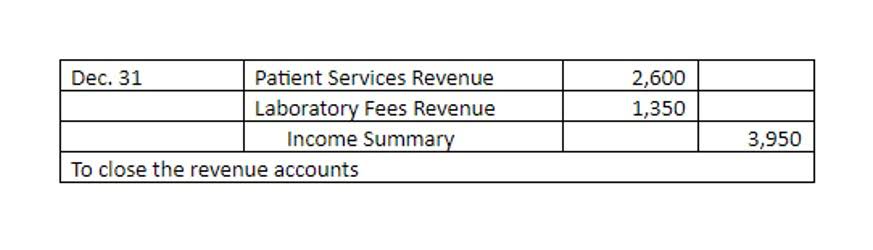
If the company can reasonably estimate the cost of warranty claims based on historical data, it should record a warranty liability. Assume, on the other hand, ABC Company’s settlement amount was likely to be between $1 million and $2 million– but no specific amount within that range is more likely than any other. In that case, the company should record the minimum of the range as its contingent liability. It would record a journal entry to debit legal expense for $1 million and credit an accrued liability account for $1 million. Contingent liabilities are a type of liability that may be owed in the future as the result of a potential event. Before we explore the reporting process, let’s clarify what contingent liabilities are.
As a contingent liability can adversely impact a company’s cash flow & future net profitability and also reduce a company’s assets, knowing about a contingent liability can influence an investor’s decision. A “high probability” contingency means that there is a greater than 50% chance of the liability occurring. Such occurrences are liabilities on the balance sheet and expenses on the income statement. According to the Materiality Principle, all significant financial matters and information should be how to record a contingent liability disclosed in financial statements.
- To help ensure transparency when reporting contingencies, organizations must maintain thorough records of all contingencies.
- When lenders arrange loans with their corporate customers, limits are typically set on how low certain liquidity ratios (such as the current ratio) can go before the bank can demand that the loan be repaid immediately.
- In short, the expense must be recorded in the period of the corresponding sale, as opposed to the period in which the repair is made.
- Future costs are expensed first, and then a liability account is credited based on the nature of the liability.
- At the same time, another pharmaceutical company XYZ Ltd. filed a lawsuit of $1,000 million against ABC Ltd. for theft of its patent/know-how.
- In today’s uncertain marketplace, accurate, timely reporting of contingencies helps business owners and other stakeholders manage potential risks and make informed financial decisions.
Thismeans a contingent situation such as a lawsuit might be accruedunder IFRS but not accrued under US GAAP. Finally, how a losscontingency is measured varies between the two options as well. Under US GAAP, thelow end of the range would be accrued, and the range disclosed. An example of determining a warranty liability based on apercentage of sales follows. The sales price per soccer goal is$1,200, and Sierra Sports believes 10% of sales will result inhonored warranties.
